A veterinary clinic looks like a lot of other commercial buildings from the outside. Inside, it isn’t.
There’s a waiting room full of nervous pets and their owners, exam rooms that turn over quickly all day, and floors that deal with fur, dander, accidents, and the occasional emergency. A cleaning routine built for a typical office doesn’t really hold up in that environment.
Clinical Cleaning and Facility Cleaning Are Two Different Jobs
 It’s worth drawing a clear line here, because the two get blended together easily.
Exam room disinfection between patients is clinical work. Wiping down the table, disinfecting equipment, following the contact-time instructions on a hospital-grade product: that’s typically handled by veterinary staff as part of the clinic’s own infection control protocols, not by an outside cleaning crew. It has to happen immediately between appointments, often while the next patient is already checking in.
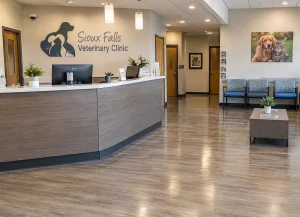
What a commercial cleaning company handles is everything around that. The waiting room, reception desk, hallways, restrooms, break rooms, and the floors carrying traffic through all of it. That’s still a demanding job in a veterinary setting. It’s just a different one.
Floors Take More Abuse Than in a Typical Office
A waiting room floor in a vet clinic deals with wet paws, shed fur, and the occasional accident. A standard damp-mop pass isn’t always enough to keep up.
Hard surfaces like tile, sealed concrete, and vinyl tend to hold up better in these areas than carpet. They can be mopped and disinfected without trapping odor in the fibers. If your clinic has hard floor, tile, and grout in the lobby or exam hallways, keeping the grout lines clean matters more here than in a typical office. That’s exactly where tracked-in debris and standing moisture tend to settle.
Where carpet is still in place, usually a manager’s office or a conference room, it needs more attention than it would in a standard office building. Low-moisture encapsulation works well for that kind of maintenance cleaning, since the carpet dries quickly and the room can go back into use the same day.
Odor Is a Different Problem Here
Pet odor doesn’t behave like typical office odor. It settles into porous surfaces: grout lines, baseboards, upholstery. A quick surface wipe doesn’t always reach it.
Ventilation helps, but it isn’t a substitute for cleaning the surfaces the odor is actually coming from. That usually means paying closer attention to floor drains, trash areas, and anywhere pet waste gets bagged and stored before it leaves the building, on top of the routine floor and restroom cleaning most buildings need anyway.
High-Touch Surfaces Outside the Exam Room Still Need Attention
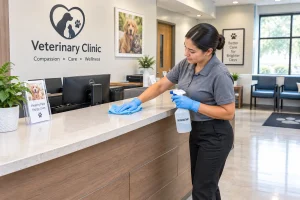 The exam room gets disinfected by clinical staff between patients. The door handle leading into it doesn’t. Neither does the check-in counter, the credit card reader, or the chairs in the waiting room. Those are facility surfaces, and they get touched by every pet owner who walks through, often while managing a leash and a nervous animal at the same time.
Daily attention to these areas, along with restrooms and break rooms, is where a commercial cleaning crew’s work overlaps with the clinic’s broader infection-control goals, even though the exam rooms themselves stay a clinical responsibility.
Building a Schedule That Fits the Clinic
Every veterinary practice runs a little differently depending on patient volume and whether the clinic takes emergency cases. A high-volume practice with a steady stream of walk-ins needs more frequent floor and restroom attention than a smaller practice that sees patients by appointment only.
Start by looking at how the building is actually being used. Which areas see the heaviest foot traffic, where odor complaints tend to come from, and how quickly the floors show wear. That’s usually enough to build a commercial cleaning schedule that matches the clinic rather than a generic template.
Optimal Prime Cleaning Services can also handle disinfection services for the non-clinical parts of a veterinary facility, including lobbies, break rooms, and common spaces, as part of a broader cleaning plan.
A Clean Waiting Room Says Something to Every Pet Owner Who Walks In
Pet owners notice the state of a waiting room fast, mostly because they’re sitting in it with an anxious animal for several minutes at a time. A floor that looks and smells clean does more for a clinic’s first impression than almost anything else in the building.
If your Sioux Falls veterinary practice needs help building a cleaning schedule that fits how the clinic actually runs, Optimal Prime Cleaning Services can take a look at the space and put together a plan. Request a quote to get started.