A gym has the same parts as most commercial buildings. A front desk, some restrooms, a couple of open rooms, and a lot of flooring.
It doesn’t get cleaned like one.
Almost everything in the building gets touched by bare skin. People sweat on a machine and someone else sits down on it ten minutes later. The flooring is usually a material that several common cleaning products will quietly ruin. And the locker room stays warm and damp for most of the day.
A standard commercial cleaning scope covers the trash, the vacuuming, the restrooms, and the surfaces people touch. That’s the foundation. A fitness facility just puts more weight on a few specific parts of it, and those are the parts worth asking about before you sign anything.
Shared Equipment Is Most of the Job
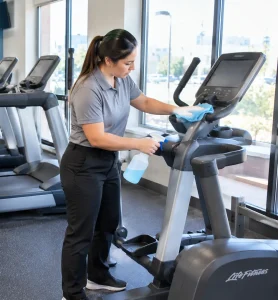 The CDC is direct about this one. MRSA spreads quickly in athletic facilities, locker rooms, gyms, and health clubs, and the reasons are shared equipment and skin-to-skin contact.
Their guidance for those facilities is worth reading if you manage one, because it’s practical rather than alarming. Keep the facility and the shared equipment clean whether or not anyone has had an infection. Clean shared equipment after each use and let it dry before the next person uses it. Focus the cleaning on the surfaces that touch people’s bare skin every day.
That last point is the one that changes a cleaning scope. In an office, the high-touch list is door handles, light switches, and the breakroom. In a gym, it’s bench pads, grips, handles, cable attachments, mats, and every rail on every machine.
The Wipe Station Isn’t a Disinfection Program
Most gyms put spray bottles and paper towels around the floor and ask members to wipe down equipment. That’s worth doing and you should keep doing it. Just be clear with yourself about what it accomplishes.
A member who sprays a bench and wipes it dry in ten seconds has cleaned that bench. They haven’t disinfected it. The EPA is specific here: a disinfectant only does what the label claims if you follow the label, and that includes the contact time. The surface has to stay visibly wet for the full contact time listed, and if it dries early, more product has to go on. Different germs on the same label can carry different contact times.
So the wipe station handles sweat and soil between users, which is real and useful. The disinfection step is a separate job, done on a schedule, by someone following the product label. If you want that documented, it belongs in the cleaning contract rather than in a sign on the wall.
One more thing from the CDC, since it comes up in sales pitches: there’s little evidence that spraying or fogging rooms on a large scale does more good than targeted cleaning of the surfaces that actually matter. Our disinfection work follows the targeted approach for that reason.
Torn Padding Is a Maintenance Problem, Not a Cleaning One
This is the part facility managers don’t expect to hear from a cleaning company.
The CDC recommends repairing or getting rid of equipment and furniture whose surfaces are damaged enough that they can’t be properly cleaned. A bench pad with a split seam, a cracked grip, a foam roller with the cover worn through — no cleaning process fixes those. Whatever gets into the tear stays in the tear.
The same guidance says to clean equipment according to the manufacturer’s instructions, so the cleaner doesn’t damage the machine. Upholstery, touchscreens, and painted frames all have products that will haze or crack them. A crew that knows gyms asks for those instructions instead of guessing.
Locker Rooms and Showers Are Their Own Problem
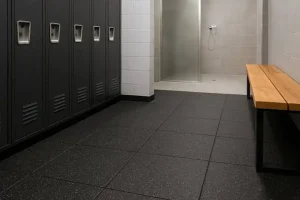 Warm, damp, and full of bare feet. That combination is why the CDC recommends wearing footwear in public showers and locker rooms, and why shared surfaces like locker room floors come up in how fungal infections such as ringworm and athlete’s foot get passed around.
Cleaning doesn’t eliminate that risk, and nobody should promise you it does. What it does is keep the buildup from getting established in the places it likes: grout lines, drain surrounds, bench slats, and the floor underneath rubber mats. Mats need to come up
and get cleaned on both sides, and the floor under them needs to dry.
Grout is the part that gets skipped. A mop moves water across the top of a tile floor; it doesn’t get down into the joints where the soil actually sits. That’s a periodic hard floor, tile, and grout cleaning job, not a nightly one, and if it’s never been done in your building you can usually tell by the color of the grout near the showers.
Rubber Flooring Is Easy to Ruin
Gym floors are usually rubber, and rubber is fussier than it looks.
The consistent guidance across flooring suppliers and commercial floor care sources is to clean it with a pH-neutral cleaner and to stay away from bleach, ammonia, solvents, degreasers, and oil soaps. Those products break the rubber down over time. You get discoloration, a surface that turns sticky, and eventually a loss of traction, which matters more in a room where people are moving weight around.
Two other habits cause damage. Abrasive pads and stiff brushes dull the surface. And over-wetting lets water sit in the seams between tiles, where it works on the adhesive underneath and gives mold somewhere to grow. Damp mopping and good water recovery beat flooding the floor.
When a rubber floor has gone sticky or blotchy, it’s usually because someone reached for a strong general-purpose cleaner and used it for months. That’s a common enough situation that it’s worth checking what’s in your janitorial closet before you blame the floor.
Whatever product gets used should be one your flooring manufacturer signs off on. If nobody can produce that paperwork, that’s the first thing to fix.
Ask These Before You Sign
If you’re comparing bids for gym cleaning services in Sioux Falls, these questions sort out who has actually cleaned a fitness facility:
– Which surfaces are on the high-touch list, and how often does each get done?
– Which disinfectant is being used, and what’s the contact time on the label?
– What product goes on the rubber flooring, and is it approved by the flooring manufacturer?
– How often do the locker room grout and drains get a deep clean, separate from the nightly mopping?
– Do the mats come up, and does the floor underneath get cleaned and dried?
The CDC also suggests something simple that most facilities skip: sit down with whoever cleans the building and go through the schedule together. Not once at the start of the contract. Periodically, as the building changes.
What Actually Keeps a Gym Clean
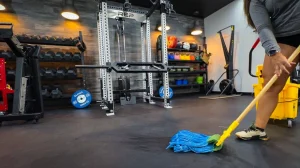 A gym doesn’t get a reputation for being clean because of a deep clean in January. It gets one because the equipment gets handled every night, the locker room never gets ahead of the crew, and the floor still has grip three years in.
That’s a schedule question more than a product question, and it’s worth building around how your building is actually used.
If you manage a gym or fitness facility in the Sioux Falls area and want a cleaning plan
built around the equipment, the locker rooms, and the flooring you actually have, Optimal Prime Cleaning Services can walk the building with you. Request a quote and we’ll put together a scope that fits it.