Facility managers often expect commercial carpet to outlast its warranty. When it doesn’t, heavy foot traffic usually gets the blame.
But traffic isn’t usually the real problem. What wears carpet out early is how the dirt that traffic brings in gets handled, or doesn’t, before it ever grinds into the fibers. At Optimal Prime Cleaning Services, our crews see the results of skipped maintenance in Sioux Falls facilities regularly.
The Dry Soil Problem
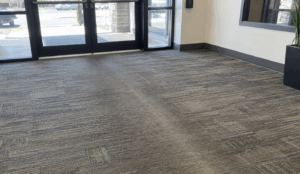 Most of what damages carpet is dry soil: the grit, sand, and winter ice melt that gets tracked in on shoes.
The Carpet and Rug Institute (CRI) reports that routine vacuuming removes 90 to 95 percent of dry soil from carpet. That one daily step does most of the work of protecting the fibers.
When a building skips or cuts back on vacuuming, that grit stays in the carpet. Every footstep then grinds it against the synthetic fibers like sandpaper. Over time, that friction cuts and frays the yarn, dulling the appearance and wearing out the texture long before the carpet ever looks stained.
Stopping it starts at the door. CRI recommends entry matting long enough for a person to take at least two steps — preferably three — with each foot before reaching the carpet, so most of the soil gets left on the mat. Mats only work if they’re cleaned regularly, though. A loaded mat stops trapping anything.
The Mistake We See Most in Deep Cleaning
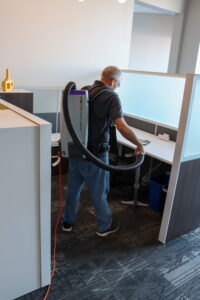 Skipped vacuuming wears carpet down slowly. The faster kind of damage our technicians run into happens during the deep cleaning itself.
A lot of crews start hot water extraction without dry-vacuuming the carpet first. When water hits a carpet full of dry soil, it turns that soil into mud at the base of the fibers. The extraction wand then drives that mud down into the backing. As the carpet dries, the dirty moisture wicks back up to the surface, leaving stubborn stains behind and, over time, working against the adhesive that holds the carpet together.
That’s why we vacuum thoroughly before any extraction. It’s the step that decides whether deep cleaning actually cleans the carpet or just pushes the dirt around.
The Vacuum You Use Matters
Protecting carpet also comes down to using the right equipment for the job.
We use vacuums with strong suction to pull dry soil out of the pile, and we match the amount of brush agitation to the carpet and the traffic. Some agitation helps lift soil out of the fibers. Too much of it, or the wrong setup for a particular carpet, can do more harm than good, so heavier brushing is reserved for high-traffic areas that need it.
The point is that not every carpet should be vacuumed the same way, any more than every floor should be cleaned with the same pad.
Paying for Deep Cleaning Without a Bigger Monthly Bill
Consistent vacuuming and good matting extend a carpet’s life. But restorative deep cleaning shouldn’t force a big jump in your regular monthly cleaning cost.
Rather than building fixed quarterly deep cleans into a standard contract, hot water extraction can be quoted as a separate project and scheduled when a high-traffic area actually needs it. That keeps the monthly cost predictable and puts the deep cleaning where it does the most good.
When Carpet Is Wearing Faster Than It Should
Most premature carpet wear isn’t bad luck or cheap carpet. It’s dry soil left in the fibers, and a deep cleaning process that skips the step that matters most.
If a carpet in your building is wearing faster than it should, request a quote and Optimal Prime Cleaning Services can take a look and recommend a maintenance and cleaning approach that fits the space.
This article is provided by Optimal Prime Cleaning Services for general informational purposes only. It is not legal, compliance, or professional advice for your specific facility. For guidance on your situation, please contact a qualified professional or the relevant authority.